
Lay Summaries of Key Publications
Original Publication: Contreras et al. (2026)
The linoleic acid-derived leukotoxin 9,10-DiHOME drives immunosuppression in patients with acute-on-chronic liver failure
Hepatology: Online ahead of print.
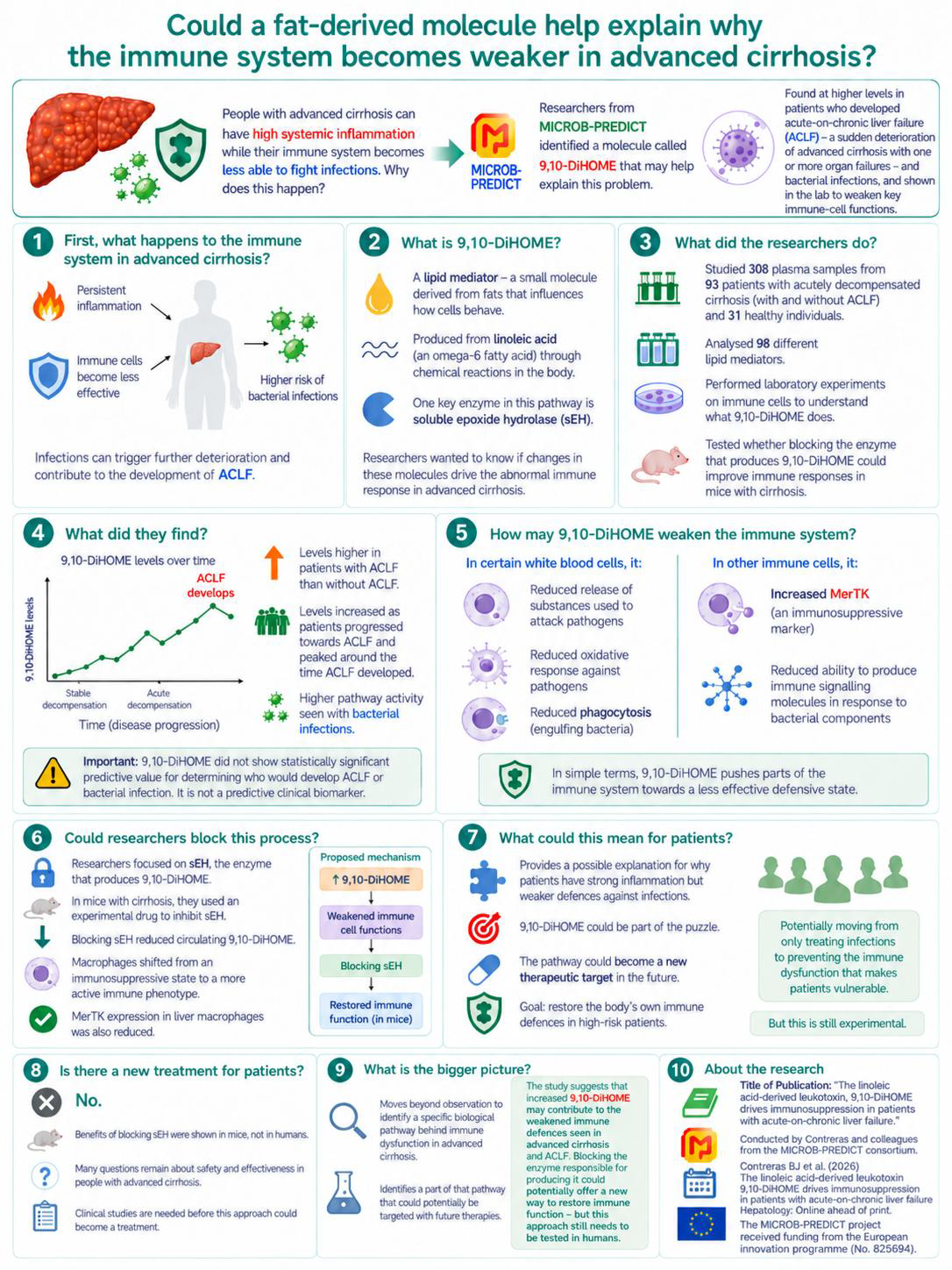
Could a fat-derived molecule help explain why the immune system becomes weaker in advanced cirrhosis?
People with advanced cirrhosis can experience a strange combination: Their body may have high levels of systemic inflammation, while their immune system becomes less able to fight infections.
Why does this happen?
Researchers from MICROB-PREDICT identified a molecule called 9,10-DiHOME that may help explain this problem. The molecule was found at higher levels in patients who developed acute-on-chronic liver failure (ACLF) – defined by sudden deterioration of advanced cirrhosis with organ failures, bacterial infections, and laboratory experiments showed that it can weaken important immune-cell functions.
First, what happens to the immune system in advanced cirrhosis?
When cirrhosis becomes more advanced and suddenly worsens — known as acute decompensation — the immune system can become severely disrupted. On one hand, the body can experience persistent inflammation. On the other, some immune cells become less effective at defending the body against bacteria. This weakened immune response can make people particularly vulnerable to bacterial infections, which can themselves trigger further deterioration and contribute to the development of ACLF. Understanding why this immune dysfunction occurs could therefore help researchers find new ways to protect patients with advanced cirrhosis.
What is 9,10-DiHOME?
9,10-DiHOME is a lipid mediator — a small molecule derived from fats that can influences cell behaviour. It is produced from linoleic acid, an omega-6 fatty acid, through a series of chemical reactions in the body. One of the key enzymes involved in producing 9,10-DiHOME is called soluble epoxide hydrolase, or sEH. The researchers wanted to understand whether changes in these fat-derived signalling molecules could be contributing to the abnormal immune response seen in advanced cirrhosis.
What did the researchers do?
The researchers initially studied 308 plasma samples collected over time from 93 patients with acutely decompensated cirrhosis, with and without ACLF. They also included samples from 31 healthy individuals. They analysed 98 different lipid mediators to see whether particular molecules were associated with worsening disease. They then carried out laboratory experiments on immune cells to investigate what 9,10-DiHOME actually does. Finally, they tested whether blocking the enzyme responsible for producing 9,10-DiHOME could improve immune responses in mice with cirrhosis.
What did they find?
Among the lipid mediators studied, 9,10-DiHOME stood out. Its levels were higher in patients with ACLF than in patients with acute decompensation without ACLF. Even more interestingly, when researchers followed patients over time, levels of 9,10-DiHOME increased as patients progressed towards ACLF and peaked around the time ACLF developed. Higher activity of the pathway producing 9,10-DiHOME was also seen when some patients developed bacterial infections. However, there is an important distinction: 9,10-DiHOME itself did not show statistically significant predictive value for determining which patients would develop ACLF or bacterial infection. At this stage, it can therefore not be considered a predictive clinical biomarker.
How may 9,10-DiHOME weaken the immune system?
This was one of the most interesting parts of the study. Researchers exposed healthy immune cells to 9,10-DiHOME and found that it interfered with several of their normal defensive functions. In particular, it reduced the ability of certain white blood cells to:
- release substances used to attack pathogens,
- produce an effective oxidative response against them, and
- engulf bacteria through a process called phagocytosis.
In other immune cells, 9,10-DiHOME increased a marker called MerTK, which is associated with an immunosuppressive state, and reduced their ability to produce several immune signalling molecules when challenged with bacterial components.
In simple terms, 9,10-DiHOME appeared to push parts of the immune system towards a less effective defensive state.
Could researchers block this process?
Potentially — and this is where the study becomes particularly interesting for future research.
Instead of targeting 9,10-DiHOME directly, researchers focused on sEH, one of the enzymes responsible for producing it. In mice with cirrhosis, researchers used an experimental drug to inhibit this enzyme. Blocking sEH reduced circulating 9,10-DiHOME and shifted macrophages — an important type of immune cell — away from an immunosuppressive state and towards a more active immune phenotype. The treatment also reduced the expression of the immunosuppressive marker MerTK in liver macrophages. The study’s visual abstract on page 1 summarizes this proposed mechanism: increased 9,10-DiHOME weakens several immune-cell responses, while blocking the enzyme that generates it may help reverse some of this immune dysfunction.
What could this mean for patients?
The findings provide a possible new explanation for an important problem in advanced cirrhosis:
Why can patients have strong systemic inflammation while simultaneously becoming less able to fight infections? 9,10-DiHOME could be one part of that puzzle. If future research confirms these findings, the pathway responsible for producing this molecule could potentially become a new therapeutic target. Rather than simply treating infections after they occur, researchers might eventually be able to explore approaches that help restore the body’s own immune defences in patients at particularly high risk. But that possibility is still experimental.
Does this mean there is a new treatment for patients with cirrhosis?
No — not yet. The experiments showing benefits from blocking sEH were performed in mice, not in patients with cirrhosis. The researchers themselves highlight several unanswered questions, including whether blocking this pathway in people with advanced cirrhosis would consistently restore healthy immune function or could have unintended effects. Clinical studies would therefore be needed before this approach could be considered a treatment for patients.
What is the bigger picture?
This research moves beyond simply observing that the immune system becomes dysfunctional in advanced cirrhosis. It identifies a specific biological pathway that may contribute to that dysfunction and, importantly, a part of that pathway that could potentially be targeted with future treatments. The study suggests that increased 9,10-DiHOME may contribute to the weakened immune defences seen in advanced cirrhosis and ACLF. Blocking the enzyme responsible for producing it could potentially offer a new way to restore immune function — but this approach still needs to be tested in humans. For patients, the long-term goal is important: finding ways not only to treat infections and complications once they happen, but potentially to prevent the immune dysfunction that makes patients so vulnerable to them in the first place.
About the research The study, “The linoleic acid–derived leukotoxin 9,10-DiHOME drives immunosuppression in patients with acute-on-chronic liver failure”, was conducted by Contreras and colleagues on behalf of the MICROB-PREDICT consortium and published in the scientific journal Hepatology in 2026. The MICROB-PREDICT project has received funding from the European Union’s Horizon 2020 research and innovation programme under grant agreement No 825694.
Original Publication: Van Espen et al. (2026)
Lactococcus A phages predict ACLF while Enterococcus B phages predict bacterial infection in decompensated cirrhosis
JHEP Reports, 8(1): 101622
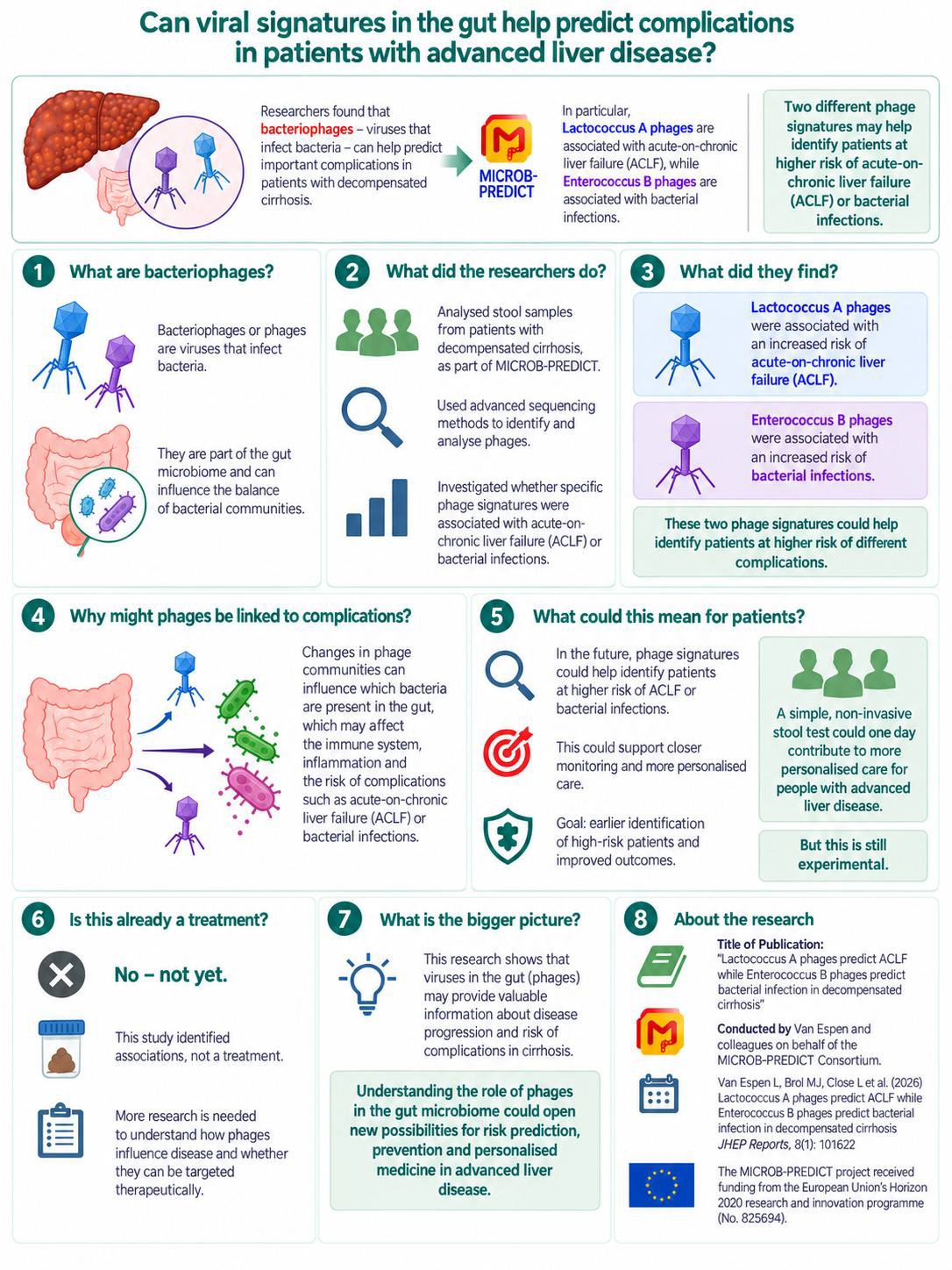
Can viral signatures in the gut help predict complications in patients with advanced liver disease?
Our gut contains trillions of microorganisms — including not only bacteria, but also bacteriophages. Could some of these bacteriophages help doctors identify people with cirrhosis who are at risk of becoming seriously ill?
Researchers from MICROB-PREDICT investigated bacteriophages, or simply phages, in people with decompensated cirrhosis. They found that certain groups of these phages were associated with the development of acute-on-chronic liver failure (ACLF) -defined by sudden deterioration of advanced cirrhosis with organ failures, bacterial infections, and a higher risk of death within 90 days.
First, what are bacteriophages?
When we talk about the gut microbiome, we usually think about bacteria. But our gut also contains a huge number of viruses. Many of these viruses are bacteriophages, which means that instead of infecting human cells, they infect bacteria. Taken together, all types of viruses living in the gut are known as the gut virome. Phages and bacteria constantly interact with each other. By influencing which bacteria survive and how they behave, phages may indirectly affect inflammation, the immune system, and human health.
Why could this matter in cirrhosis?
In people with advanced cirrhosis, the protective barrier of the gut (also called intestinal barrier can become weaker. This may allow bacteria or bacterial products from the gut to cross the intestinal barrier and contribute to increased inflammation and bacterial infections. These processes can play an important role when the condition of a patient with cirrhosis suddenly worsens. One of the most serious complications in cirrhosis is acute-on-chronic liver failure (ACLF) — a severe condition in which someone with chronic liver disease rapidly becomes very ill and may suffer from failure of one or more organs. However, predicting which patients will develop ACLF remains difficult. The researchers therefore asked whether changes in the gut virome might provide useful clues.
What did the researchers do?
Researchers analysed stool samples from people with decompensated cirrhosis and ACLF. The main study included 93 patients, from whom 292 stool samples were analysed over time. Patients were followed to see whether their condition remained stable, became unstable or progressed to ACLF. The researchers then used another group of 94 patients with decompensated cirrhosis to test one of their important findings. Using advanced genetic sequencing, they studied the viruses present in the stool and examined how different phages were related to disease progression, bacterial infections, and survival.
What did they find?
The gut virome changed as liver disease became more severe. Patients with ACLF tended to have a greater variety of phages in their gut. Importantly, researchers could also see this diversity increase within individual patients as they progressed from decompensated cirrhosis to ACLF. The study also found a change in the types of phages present as patients became more seriously ill. This suggests that the gut’s viral community is not simply a passive passenger in advanced liver disease. It changes alongside the patient’s clinical condition.
Two groups of viruses stood out
Researchers identified two particularly interesting groups of phages:
- Lactococcus A phages
These phages were more commonly found in patients who subsequently developed ACLF. Their presence was also associated with poorer survival during the following 90 days. This raises the possibility that Lactococcus A phages could one day help identify patients whose cirrhosis is at particularly high risk of worsening. However, this specific finding still needs to be replicated in another independent group of patients.
- Enterococcus B phages
A different group, called Enterococcus B phages, was associated with bacterial infections. Patients carrying these phages also had poorer 90-day survival. Importantly, the association between Enterococcus B phages and bacterial infection was also tested in a second, independent group of patients, where the researchers again found higher levels of these phages among patients with bacterial infections.
What could this mean for patients with cirrhosis?
Today, doctors use clinical information, blood tests, and scoring systems to assess how seriously ill a person with cirrhosis is. But predicting who will go on to develop ACLF remains challenging. This research suggests that information hidden within the gut virome could potentially provide an additional warning signal. In the future, analysing phages in stool samples might help doctors identify patients who are at greater risk of:
- developing ACLF,
- having one or more bacterial infections, or
- experiencing a poor short-term outcome.
This could potentially allow high-risk patients to be identified and monitored more closely. However, these possibilities still need further research before they could become part of routine patient care.
Does this mean these viruses cause ACLF or infections?
Not necessarily. The researchers found associations between particular phages and serious clinical outcomes, but this does not mean that the phages themselves cause ACLF, infection, or death. However, changes in the gut virome can be part of the disease process, a consequence of worsening disease, or both. The study therefore opens an important new area for research into the complex relationship between gut bacteria, gut viruses, inflammation, and liver disease.
Can doctors test for these viruses today?
Not yet. Gut virome analysis is currently a research tool rather than a routine clinical test. The study involved relatively small and diverse groups of patients, and some findings — particularly the possible ability of Lactococcus A phages to predict ACLF — still needs to be validated in additional patient populations. More research is also needed to understand whether these phages are simply markers of disease or whether they actively contribute to disease progression.
What is the bigger picture?
This research adds another piece to our understanding of the gut–liver connection. The gut microbiome is much more than bacteria. Viruses that interact with those bacteria may also contain valuable information about what is happening during advanced liver disease. In the future, analysing the viruses living in the gut could potentially help doctors identify people with cirrhosis who are at greater risk of ACLF or bacterial infection — allowing closer monitoring and, potentially, earlier intervention. For now, this remains a promising research direction rather than a test available in routine clinical care.
About the research
The study, “Lactococcus A phages predict ACLF while Enterococcus B phages predict bacterial infection in decompensated cirrhosis”, was conducted by Van Espen and colleagues on behalf of MICROB-PREDICT and published in JHEP Reports in 2026. The MICROB-PREDICT project has received funding from the European Union’s Horizon 2020 research and innovation programme under grant agreement No 825694. The study also received funding from other research programmes.
Original Publication: Tornai et al. (2026)
Serum Villin-1 – A Novel Marker of Gut Barrier Damage in Acutely Decompensated Cirrhosis: A Cohort Study and Validation
Alimentary Pharmacology & Therapeutics, 63(7): pp. 1018-1032
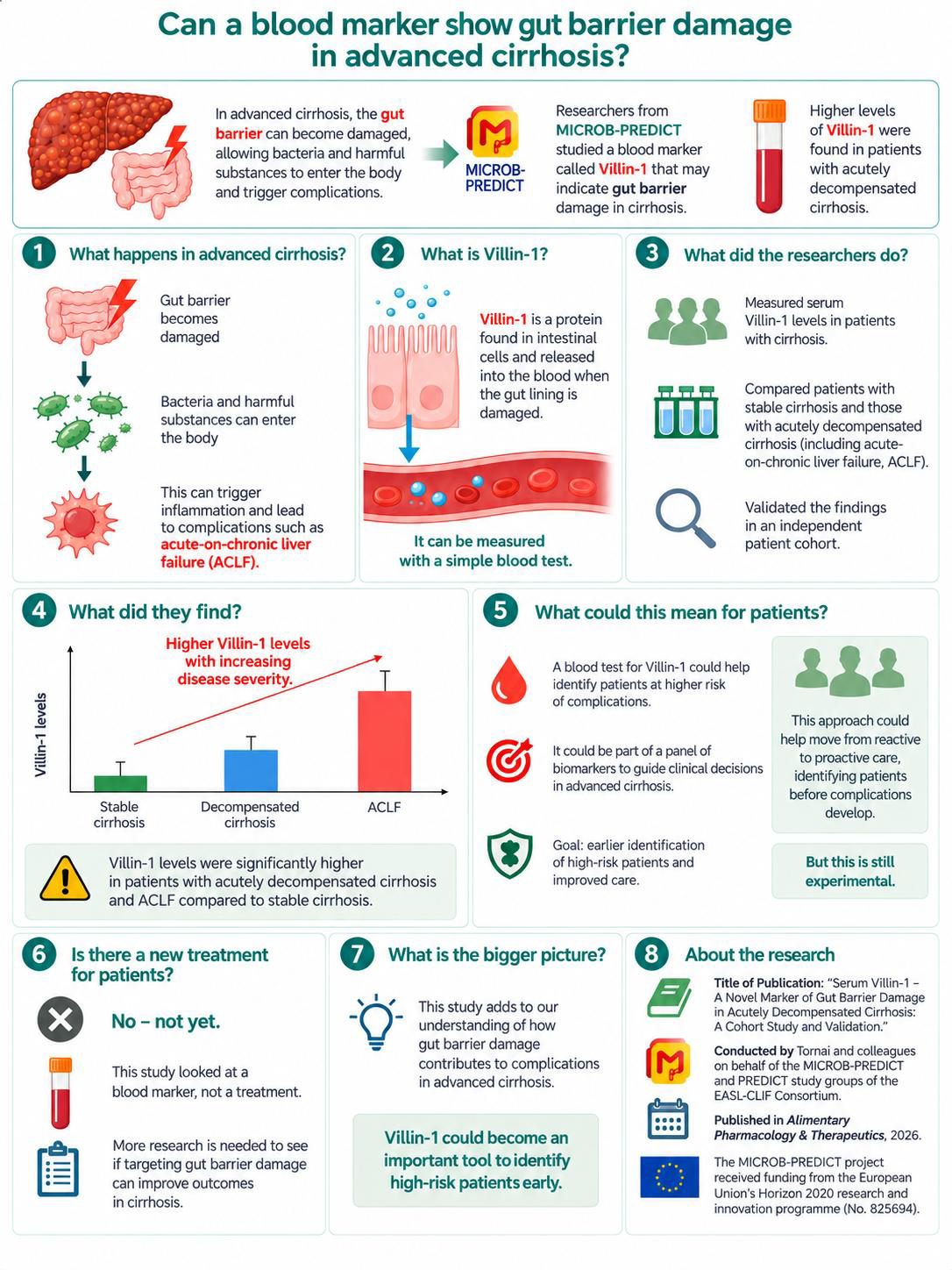
Could a blood marker show gut barrier damage in advanced cirrhosis?
The gut and liver are closely connected. But could damage to the gut also help us understand which patients with advanced liver disease are at greatest risk? Researchers from MICROB-PREDICT and the PREDICT Study Group investigated a protein called villin-1 (VIL1) and whether measuring it in the blood could provide new information about gut damage and the risk of poor outcomes in people whose cirrhosis has suddenly worsened.
Why is the gut barrier important in cirrhosis?
The gut has a protective barrier that helps keep bacteria and other potentially harmful substances inside the intestine and away from the bloodstream. In people with cirrhosis, this barrier can become damaged. When that happens, bacterial products may pass more easily from the gut into the bloodstream, contributing to inflammation and potentially worsening the patient’s condition. Despite the importance of this gut–liver connection, damage to the gut barrier is not currently included in the main scoring systems doctors use to assess the severity of acutely decompensated cirrhosis. One reason is that there has been no simple and reliable way to measure this damage.
What is villin-1?
Villin-1 is a protein found in cells lining the intestine. It helps maintain tiny structures on the surface of intestinal cells that are important for normal gut function. The researchers investigated whether injury to these cells could cause villin-1 to enter the bloodstream — and whether measuring it in a blood sample could therefore provide information about damage to the gut barrier.
What did the researchers do?
The study included 338 people with acutely decompensated cirrhosis, including patients with acute-on-chronic liver failure (ACLF) -defined by sudden deterioration of advanced cirrhosis with organ failures, as well as 50 healthy individuals. Researchers measured villin-1 in blood samples. In a smaller group, they also examined intestinal tissue samples. Importantly, the researchers first investigated their findings in a group of patients from University of Debrecen and then tested them again in a separate group of patients recruited from 25 European hospitals.
What did they find?
The results showed an interesting pattern. In patients with relatively stable decompensated cirrhosis, villin-1 levels in both intestinal tissue and blood were lower than in healthy individuals. However, as acute illness became more severe, villin-1 levels in the blood increased, reaching their highest levels in patients with ACLF. Higher levels were also found in some patients before they developed ACLF, suggesting that villin-1 may potentially provide an early signal of worsening disease. The study shows this increase as patients move towards more severe stages of illness.
Could villin-1 also tell us something about a patient’s risk?
Potentially, yes. Patients who died within 90 days had higher villin-1 levels than those who survived. Higher villin-1 was also associated with increased inflammation. Importantly, villin-1 continued to provide information about the risk of death even when researchers took the severity of the patient’s liver disease into account. The researchers also found that combining villin-1 with existing measures of disease severity could improve the identification of patients at particularly high risk. These findings were confirmed in the second patient group.
What could this mean for patients?
If these findings are confirmed in further studies, villin-1 could potentially become a simple blood-based marker of gut barrier damage. For doctors, this could provide another piece of information when assessing a patient whose cirrhosis has suddenly worsened. For patients, better risk assessment could eventually mean that those at greatest risk are identified earlier, monitored more closely and considered for appropriate treatment sooner. The researchers even propose that severe damage to the gut barrier might eventually be considered another form of organ failure in ACLF, alongside the organ failures already assessed today.
Is villin-1 already used as a biomarker in hospitals?
No. This is an important point. Villin-1 is currently a promising research biomarker, not a routine clinical test for people with cirrhosis. The researchers found different optimal villin-1 thresholds in their two patient groups. Before the marker could enter routine clinical practice, it would need further prospective validation, a standardized laboratory method and a clearly established threshold. More research is also needed to confirm exactly where circulating villin-1 comes from and how its levels change as a patient’s condition worsens or improves.
What is the bigger picture?
This study highlights something that can sometimes be overlooked in advanced liver disease:
The liver does not become sick in isolation. Damage to the gut barrier, inflammation and liver disease can influence one another. Finding a reliable way to measure gut barrier damage could therefore help researchers and clinicians understand this relationship better. In the future, a simple blood marker such as villin-1 could potentially help doctors see another important part of the picture — the health of the gut barrier — and identify high-risk patients more accurately.
About the research
The study, “Serum Villin-1—A Novel Marker of Gut Barrier Damage in Acutely Decompensated Cirrhosis: A Cohort Study and Validation”, was conducted by Tornai and colleagues on behalf of MICROB-PREDICT and the PREDICT Study Group of the EASL-CLIF Consortium and published in Alimentary Pharmacology & Therapeutics in 2026. The research included patients from the MICROB-PREDICT cohorts and received funding from the European Union’s Horizon 2020 MICROB-PREDICT project (Grant Agreement No. 825694) and other research programmes.
Original Publication: Balogh et al. (2025)
Secretory IgA Is a Key Marker Among Gut Barrier Dysfunction-Related Immunoglobulins Predicting Outcomes in ACLF
Liver International, Volume 45(10): e70350
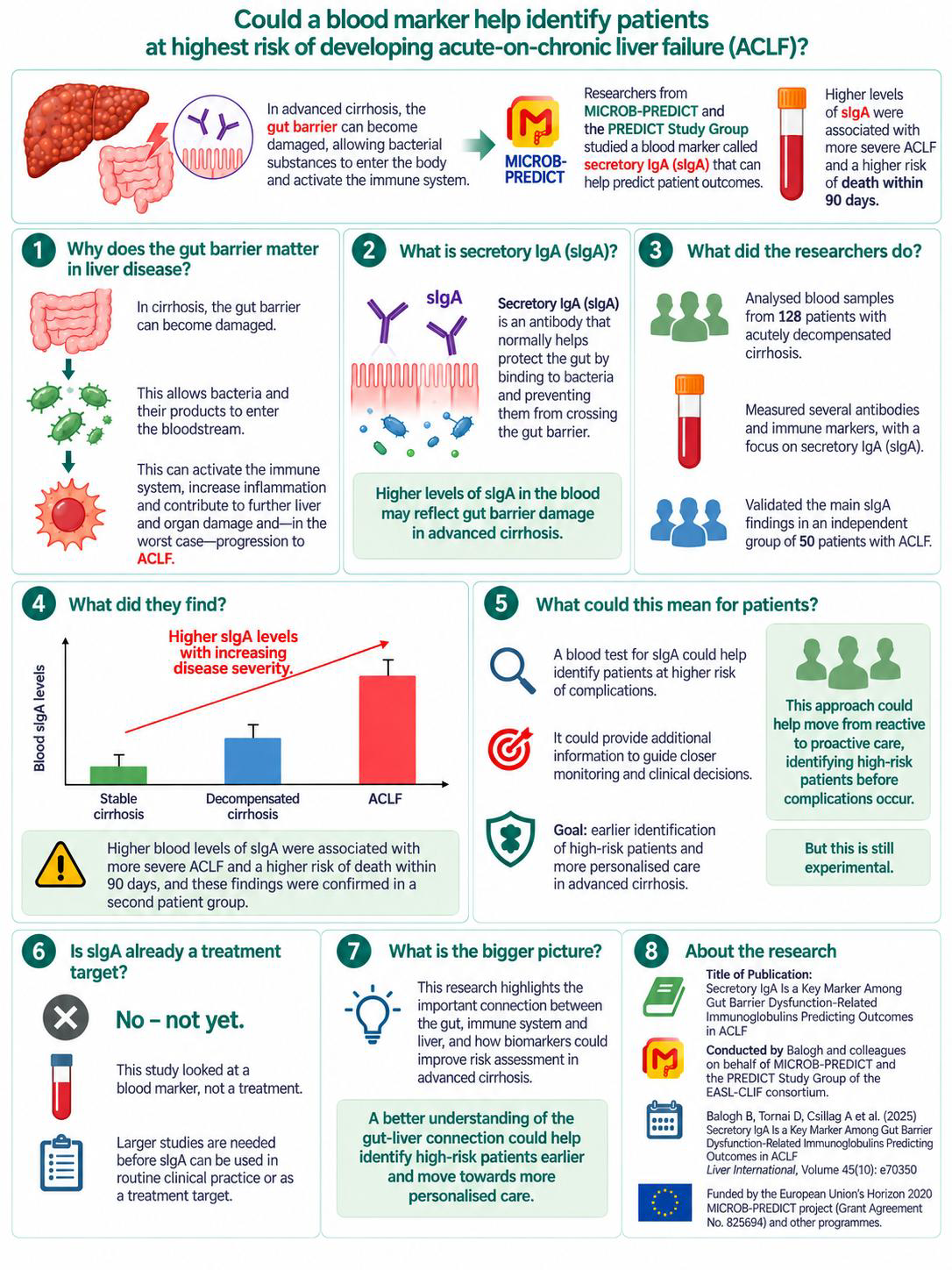
Could a blood marker help identify patients at highest risk of developing acute-on-chronic liver failure (ACLF)?
What if a blood test could give doctors more information about which patients with severe liver disease are at greatest short-term risk? Researchers from MICROB-PREDICT and the PREDICT Study Group investigated whether changes in the immune system and the gut barrier could provide important clues. Their study focused on secretory Immunoglobulin AA (sIgA), an antibody closely connected to the gut’s protective barrier, and its potential to help predict outcomes in people with acute-on-chronic liver failure (ACLF) -defined by sudden deterioration of advanced cirrhosis with organ failures.
Why does the gut barrier matter in liver disease?
The gut and liver are closely connected. Normally, the gut barrier helps prevent bacteria and their products from entering the bloodstream. In cirrhosis, this protective barrier can become damaged, allowing more bacterial material to pass from the gut into the circulation. This can activate the immune system, increase inflammation and contribute to further liver and organ damage.
What did researchers want to discover?
Researchers asked: Could antibodies linked to the gut barrier tell us something about how severe a patient’s condition is — and their risk of poor outcomes? They studied blood samples from 128 patients with acutely decompensated cirrhosis, measuring several different antibodies and immune markers. They paid particular attention to secretory IgA, an antibody that normally plays an important role in protecting the gut against bacteria. An additional group of 50 patients with ACLF was used to validate the main sIgA findings.
What did they find?
The researchers found that changes in several antibodies were associated with the severity of liver disease. But one marker stood out in patients with ACLF: secretory IgA. Higher blood levels of sIgA were associated with more severe ACLF and a higher risk of death within 90 days. Importantly, the researchers confirmed this association in a second group of patients. The study suggests that high levels of sIgA in the blood may reflect severe damage to the gut barrier, allowing substances that would normally remain in the gut to leak into the bloodstream.
What could this mean for patients?
ACLF is a serious condition in which a person with chronic liver disease suddenly becomes much sicker and may develop failure of one or more organs. Identifying patients at greatest risk as early as possible is therefore extremely important. If further research confirms these findings, measuring sIgA could potentially provide doctors with additional information to help identify high-risk patients and guide closer monitoring and care.
Does this mean sIgA can already predict what will happen to an individual patient?
No. Although the results are promising, sIgA is not yet an established clinical test for predicting outcomes in ACLF. The ACLF groups studied were relatively small, and the authors stress that the findings need to be validated in larger, independent patient populations. sIgA would also need to be interpreted together with existing measures of disease severity rather than on its own.
What is the bigger picture?
This research helps us better understand the important relationship between the gut, immune system and liver. It also shows how biomarkers could potentially improve the way we identify patients at greatest risk. A better understanding of the gut–liver connection could help doctors recognise high-risk patients earlier and move towards more personalised care.
For patients with severe liver disease, better risk assessment could ultimately support closer monitoring, more informed clinical decisions and earlier intervention when needed.
About the research
The study, “Secretory IgA Is a Key Marker Among Gut Barrier Dysfunction-Related Immunoglobulins Predicting Outcomes in ACLF”, was published in Liver International in 2025 by Balogh and colleagues on behalf of MICROB-PREDICT and the PREDICT Study Group of the EASL-CLIF Consortium. The research received support from the European Union’s Horizon 2020 MICROB-PREDICT project (Grant Agreement No. 825694) and other funding programmes.
Original Publication: Thorhauge et al. (2024)
Using liver stiffness to predict and monitor the risk of decompensation and mortality in patients with alcohol-related liver disease
Journal of Hepatology, 81(1): pp. 23-32
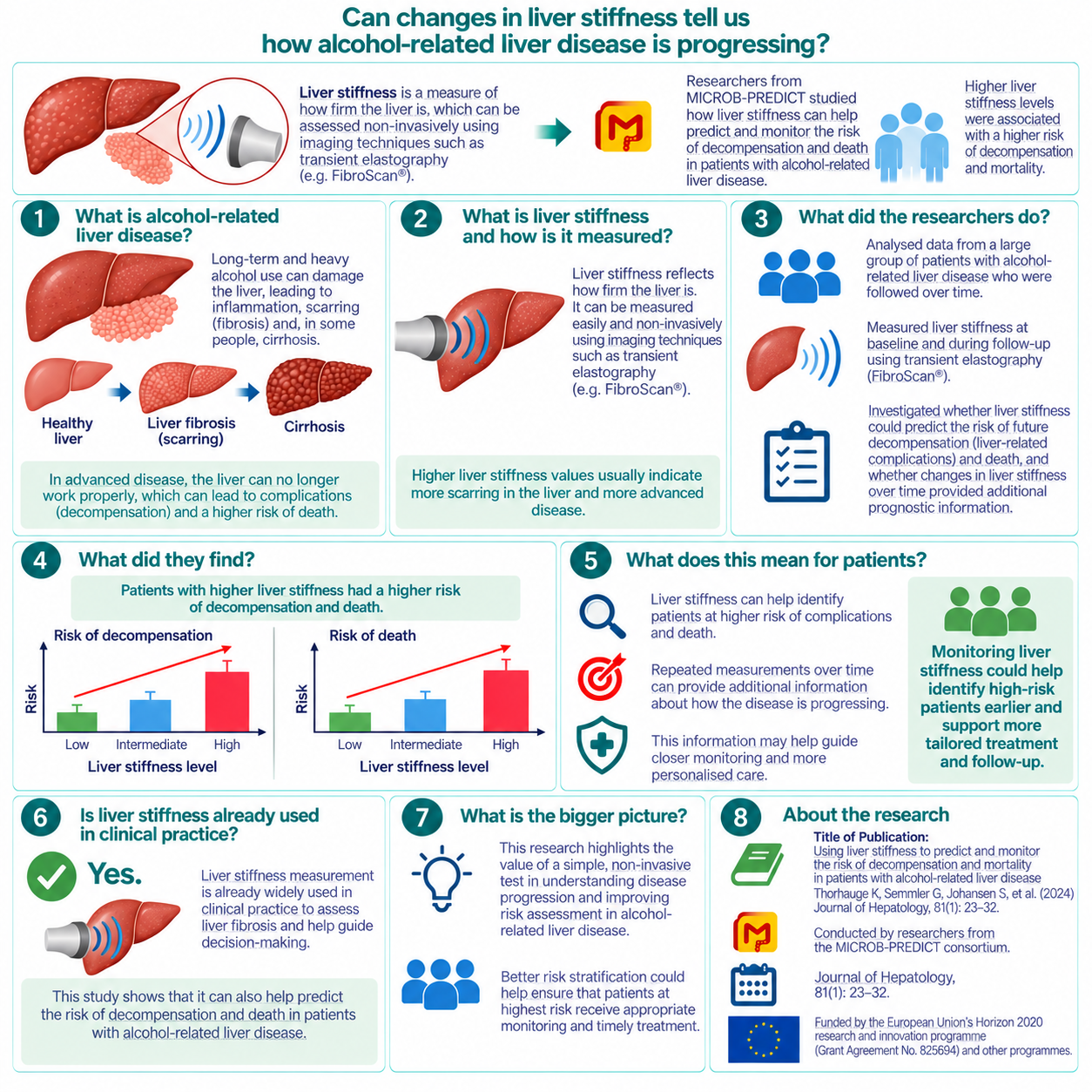
Can changes in liver stiffness tell us how alcohol-related liver disease is progressing?
What if a simple, non-invasive test could help doctors see whether liver disease is becoming more or less serious over time?
This is what researchers from the MICROB-PREDICT, GALAXY and MicrobLiver projects investigated in people at risk of alcohol-related liver disease (ALD). They studied whether liver stiffness measurements could help predict the risk of serious complications — and whether repeating the measurement over time could provide even more useful information.
Why does monitoring liver stiffness matter?
Alcohol-related liver disease can progress gradually, sometimes before a person develops obvious symptoms. A test called transient elastography — often known through devices such as FibroScan — can measure how stiff the liver is without a biopsy. Greater liver stiffness can indicate more advanced liver disease. But researchers wanted to go beyond a single measurement: Could changes in liver stiffness over time tell us whether a patient’s risk is increasing or decreasing?
What did researchers investigate?
The researchers studied 536 people from Denmark and Austria who were at risk of alcohol-related liver disease but had not yet experienced liver decompensation. They examined whether liver stiffness could predict decompensation — when the liver can no longer compensate for the damage and serious complications develop — as well as the risk of death. For 371 participants, liver stiffness was measured again after a median of approximately two years, allowing researchers to see whether changes over time were linked to future outcomes.
What did they find?
The results showed that both the initial liver stiffness measurement and changes over time provided important information about a person’s future risk. People who already had compensated advanced chronic liver disease at the beginning of the study had a much higher risk of future decompensation than those without advanced disease. Among people with advanced disease who had repeat measurements, an increase in liver stiffness of 20% or more was associated with a higher risk of decompensation and death compared with patients whose liver stiffness decreased. The graphical summary on page 1 captures the main finding clearly: Liver stiffness can help both predict and monitor risk in alcohol-related liver disease.
What could this mean for patients?
A liver stiffness measurement may provide more than a snapshot of liver health. Repeating the test over time could help show whether a person’s liver disease and future risk are changing. This could potentially help healthcare professionals identify people who need closer monitoring and support more informed conversations between patients and their healthcare teams. Importantly, however, a decrease in liver stiffness does not mean that all risk has disappeared. People with advanced liver disease still require appropriate follow-up and surveillance.
Does this mean everyone needs regular liver stiffness tests?
Not necessarily. Current recommendations support regular liver stiffness monitoring for people with compensated advanced chronic liver disease, while monitoring for people without advanced disease should be based on their individual risk. The researchers also point out that more studies are needed to determine how often measurements should be repeated and how changes should best be interpreted in different patients.
What is the bigger picture?
This research supports an important shift in liver care: Don’t only measure where the patient is today — monitor where their liver health is heading. Non-invasive tests such as liver stiffness measurement could help healthcare professionals follow disease progression without relying on liver biopsy and identify changes in risk earlier. For patients, this could ultimately mean better monitoring, earlier recognition of worsening disease and more personalised follow-up.
About the research
The study, “Using liver stiffness to predict and monitor the risk of decompensation and mortality in patients with alcohol-related liver disease”, was published in the Journal of Hepatology in 2024. It included researchers from the MICROB-PREDICT, GALAXY, and MicrobLiver consortia. MICROB-PREDICT has received funding from the European Union’s Horizon 2020 research and innovation programme under Grant Agreement No. 825694.
Original Publication: Mücke et al. (2024)
Terlipressin therapy is associated with increased risk of colonisation with multidrug-resistant bacteria in patients with decompensated cirrhosis
Aliment Pharmacol Ther, 59(7): pp. 877-888
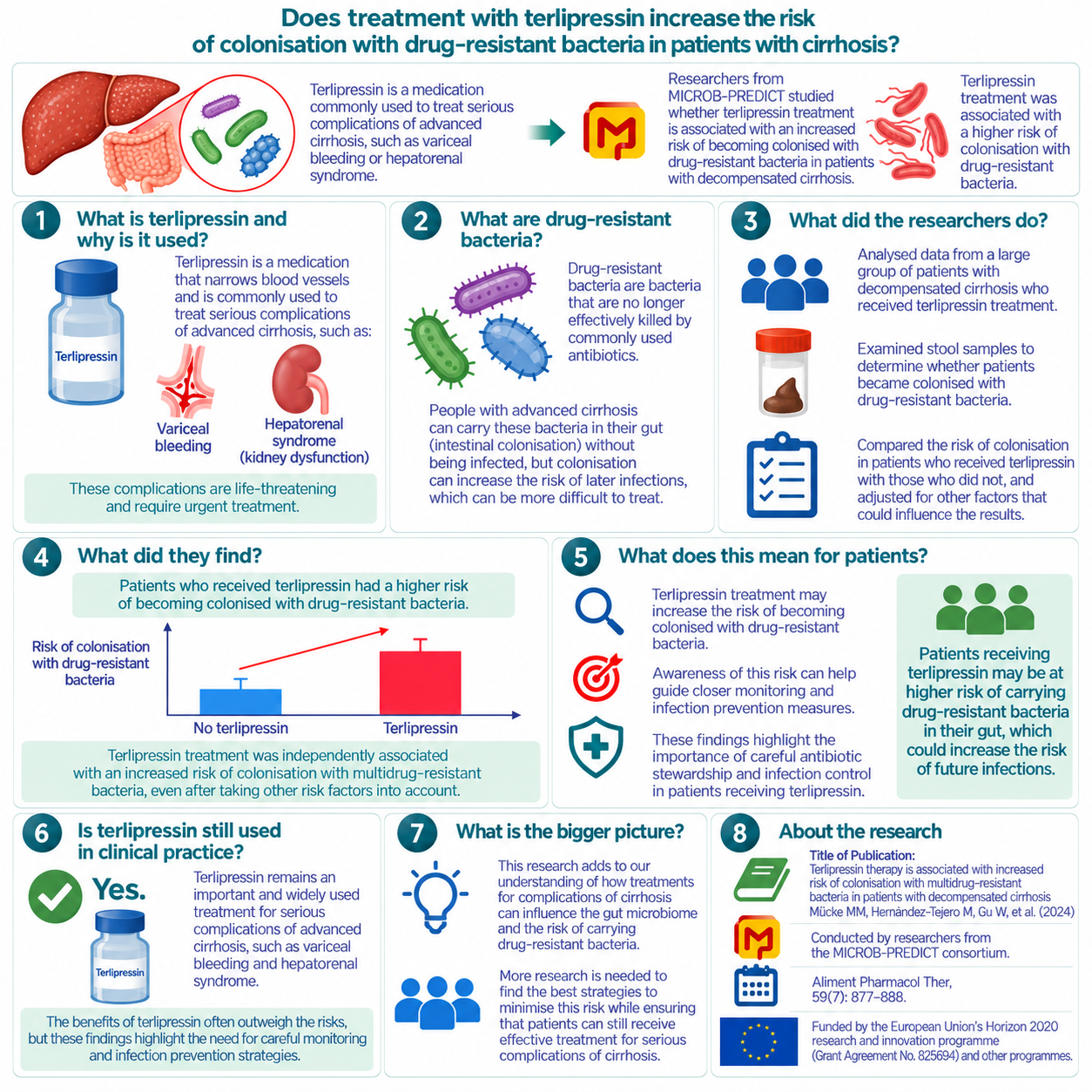
Does treatment with terlipressin increase the risk of colonisation with drug-resistant bacteria in patients with cirrhosis?
Bacterial infections can be particularly dangerous for people with advanced liver disease. But could some treatments also influence the bacteria living in our bodies?
Researchers from the MICROB-PREDICT project and PREDICT Study Group investigated this question in people with decompensated cirrhosis — a stage of liver disease in which serious complications have developed. Their findings point to an unexpected association between the medicine terlipressin and colonisation with multidrug-resistant bacteria.
Why are resistant bacteria a concern for people with cirrhosis?
People with advanced cirrhosis have an increased risk of serious bacterial infections. Some bacteria have become resistant to several antibiotics. These are known as multidrug-resistant organisms (MDROs), and infections caused by them can be much more difficult to treat. Importantly, a person can first become colonised with resistant bacteria — meaning the bacteria are present in or on the body without necessarily causing an infection. This colonisation can increase the risk of developing an MDRO infection later. In this study, patients who were colonised were indeed more likely to subsequently develop an MDRO infection.
What did the researchers want to discover?
Researchers wanted to know: Could medicines other than antibiotics also influence the risk of becoming colonised with resistant bacteria? Antibiotic use is a well-known risk factor for the development of antibiotic resistance. They therefore examined medications often received by people with acute decompensation or acute-on-chronic liver failure, including terlipressin. Terlipressin is used in people with cirrhosis to manage serious complications, particularly hepatorenal syndrome, a form of kidney dysfunction associated with advanced liver disease.
What did the study find?
The main analysis included 324 patients admitted to intensive care in Frankfurt. The researchers also examined additional patient groups from Barcelona and a European multicentre cohort. Around 30% of the 324 patients were colonised with multidrug-resistant bacteria, and 11% developed an MDRO infection during their hospital stay. As expected, previous antibiotic treatment was associated with a higher risk of MDRO colonisation. However, researchers also found something unexpected: Among the other medications studied, recent terlipressin treatment was associated with an increased risk of MDRO colonisation. Additional analyses in other patient groups and analysis of antibiotic-resistance genes in the gut microbiome provided further evidence supporting this observation.
Does this mean terlipressin causes antibiotic resistance?
No. This is a very important distinction. The study found an association, but it cannot establish that terlipressin itself causes patients to become colonised with resistant bacteria. The main study was retrospective, and relatively few patients had received terlipressin. The authors also acknowledge that patients receiving terlipressin may have been sicker and therefore already more vulnerable to colonisation and infection. The researchers therefore stress that future prospective studies are needed to confirm the finding.
Why could this research matter to patients?
Terlipressin is an important medicine used to manage serious complications of advanced cirrhosis. These findings do not mean that patients should stop or avoid treatment. Instead, the research raises a new question about whether patients receiving terlipressin may benefit from closer monitoring for multidrug-resistant bacteria. If future studies confirm the association, this knowledge could help healthcare professionals identify patients at greater risk and potentially adapt infection monitoring and treatment strategies accordingly.
What is the bigger picture?
This study highlights how complex the relationship between medicines, the gut microbiome, and antibiotic resistance can be. Understanding these connections is particularly important for people with advanced liver disease, where bacterial infections can have severe consequences. The message is therefore not “terlipressin is unsafe.” Instead, the research tells us: We may need to understand and monitor infection risk more carefully in patients receiving certain treatments. More research is needed to determine whether terlipressin directly influences MDRO colonisation, why this association may occur, and how this knowledge could eventually be used to improve patient care.
About the research
The study “Terlipressin therapy is associated with increased risk of colonisation with multidrug-resistant bacteria in patients with decompensated cirrhosis” was published in Alimentary Pharmacology & Therapeutics in 2024 by Mücke and colleagues on behalf of MICROB-PREDICT and the PREDICT Study Group of the EASL-CLIF Consortium. The research received support from several programmes, including the EU-funded MICROB-PREDICT project (Grant Agreement No. 825694).
Original Publication: Torp et al. (2024)
Personalised human albumin in patients with cirrhosis and ascites: design and rationale for the ALB-TRIAL – a randomised clinical biomarker validation trial
BMJ Open, 14(2): e079309
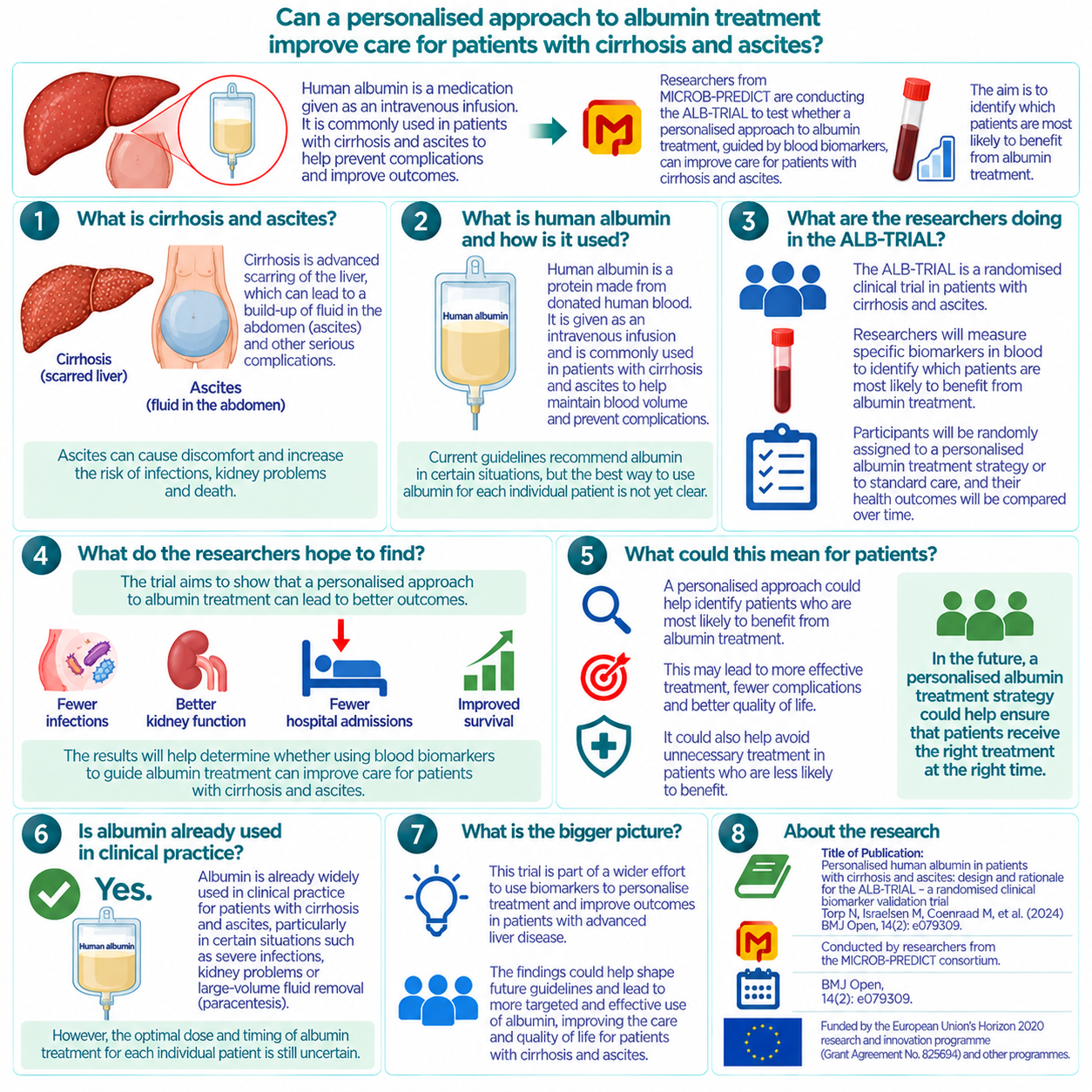
Can a personalised approach to albumin treatment improve care for patients with cirrhosis and ascites?
What if doctors could predict which patients are most likely to benefit from a treatment before starting months of therapy?
This is the idea behind the ALB-TRIAL, a European clinical study developed within the EU-funded MICROB-PREDICT project. The study focuses on people living with cirrhosis and ascites — a build-up of fluid in the abdomen that can occur in advanced liver disease. Human albumin is already used to treat certain complications of cirrhosis, but not every patient may equally benefit from long-term albumin treatment. Researchers therefore want to understand whether treatment could become more personalised.
Why isn’t the same treatment right for everyone?
People with the same disease can respond differently to the same treatment. Previous MICROB-PREDICT research identified substances in the blood, called metabolites, that could potentially help distinguish patients who are more or less likely to benefit from albumin treatment. The ALB-TRIAL was designed to test whether these biomarkers can reliably predict response to long-term albumin treatment.
What is the ALB-TRIAL trying to discover?
The central question is simple: Can a blood test help identify which patients with cirrhosis and ascites are most likely to benefit from long-term albumin treatment? The study plans to include 240 patients. Based on the biomarker, patients are classified as having a higher or lower expected benefit and are then randomly assigned to receive either human albumin or placebo every 10 days for six months.
What are researchers looking for?
Researchers want to know whether the biomarker can predict meaningful benefits for patients.
They are looking at important outcomes such as worsening of cirrhosis, hospitalisations, the need for a transjugular intrahepatic shunt (TIPS), liver transplantation and survival, as well as treatment safety, healthcare use and economic impact. In other words: Does the treatment work — and can we predict for whom it will work?
Why could this matter to patients?
Long-term treatment means repeated infusions and healthcare visits. If researchers could identify in advance who is most likely to benefit, treatment could potentially become more personalised. The longer-term ambition is: The right treatment, for the right patient, at the right time. This could support better-informed treatment decisions while potentially reducing unnecessary treatment for people unlikely to benefit.
Does this mean the blood test is ready to use?
No. This publication describes the design of the ALB-TRIAL, not its final results. Earlier research provided a promising signal, but the trial is designed to establish whether the biomarker actually works as a reliable tool for predicting treatment response.
Where does the patient voice fit in?
Patients are not only potential beneficiaries of this research — the patient perspective also contributed to the study. ELPA President Marko Korenjak is among the co-authors of the publication, bringing patient representation into research developed within the MICROB-PREDICT Consortium. Ultimately, personalised medicine should help answer questions that matter to patients: Will this treatment help me? Is the treatment burden justified? And can my doctors make a better decision based on my individual situation?
What is the bigger picture?
The ALB-TRIAL is part of a wider move towards personalised and precision medicine in liver disease. Instead of treating everyone with the same diagnosis in exactly the same way, researchers are exploring whether biological information can help guide more individual treatment decisions. If successfully validated, this approach could contribute to more personalised care, better treatment decisions and less unnecessary treatment burden for people living with advanced liver disease.
About the research
The MICROB-PREDICT project has received funding from the European Union’s Horizon 2020 research and innovation programme under grant agreement No 825694. The study also received funding from other research programmes.

 Members
 Work Packages
 Publications
 Press Coverage
 Interactive Q & A
 Downloads
 Data Hub
 Contact
 Privacy Policy